The B2B cold call: what the first call is for
A first cold call to a company has one goal: a second meeting. How to use the thirty seconds a prospect's question gives you, and how calls become arguments.
40 articles on business systems — written from inside the projects, not from the decks.
A first cold call to a company has one goal: a second meeting. How to use the thirty seconds a prospect's question gives you, and how calls become arguments.
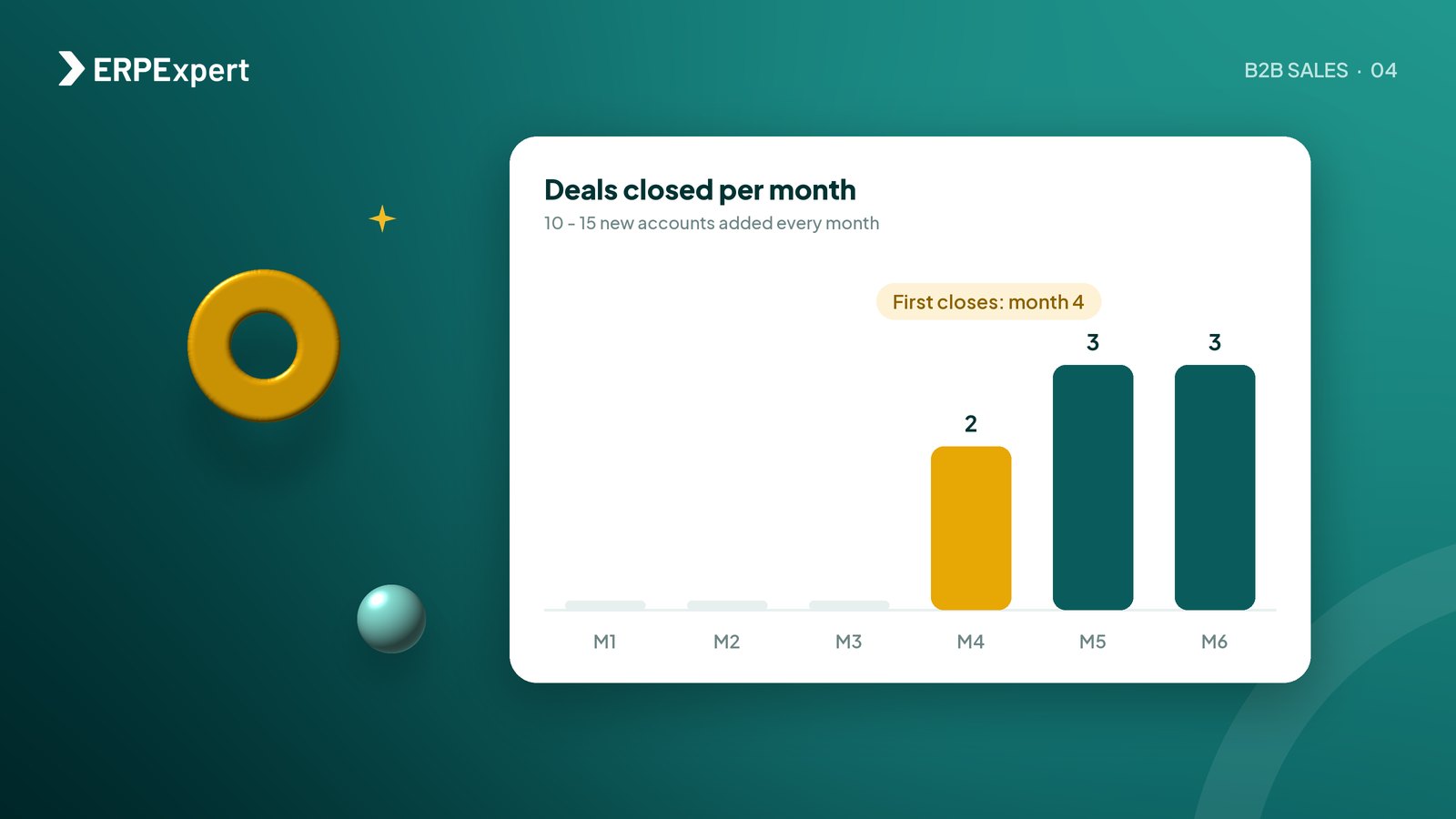
ERP deals take months to close. How to build a pipeline that closes two or three a month from month four, and why 'we just bought a system' is not the end.
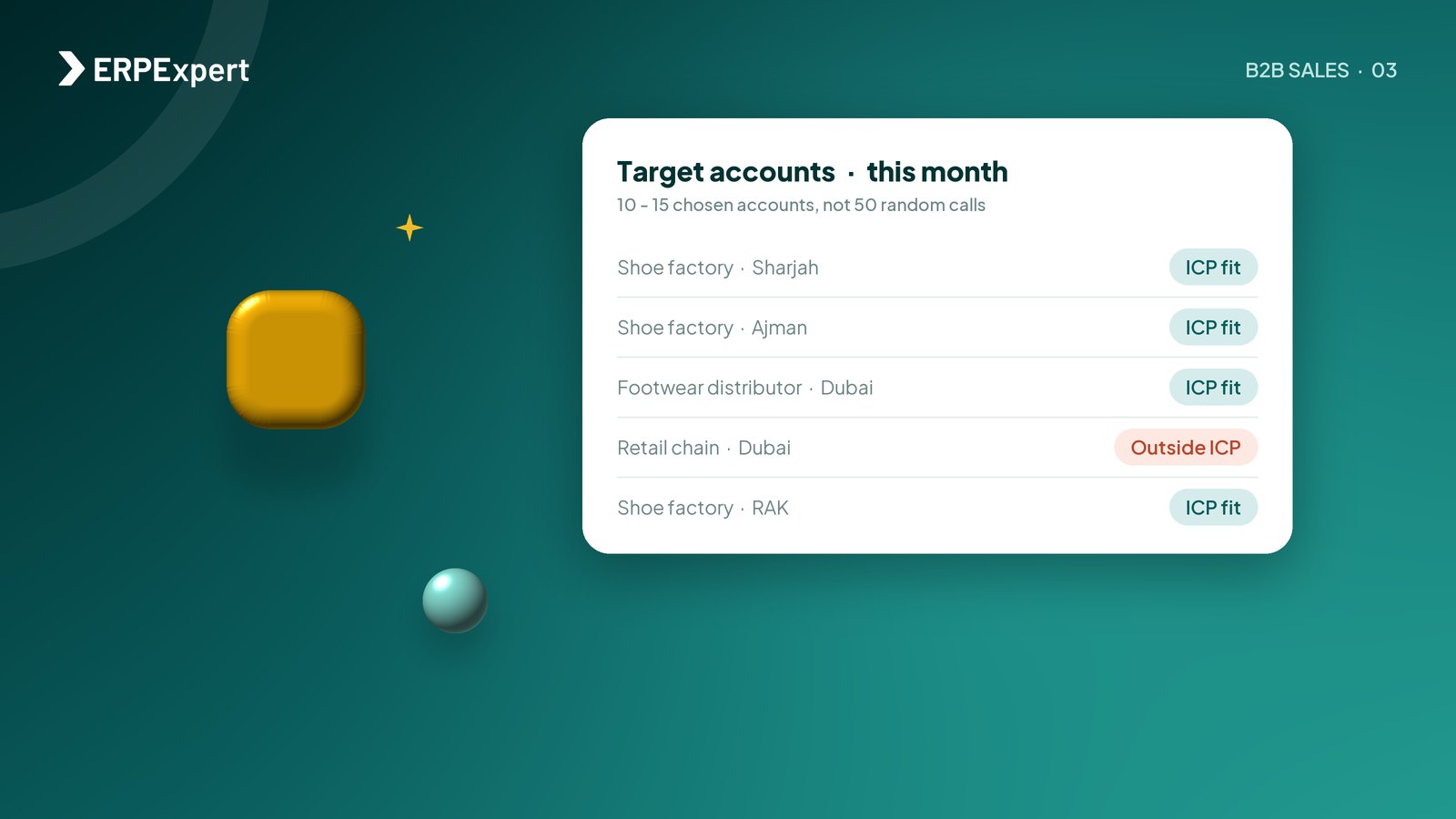
Why 10 to 15 hand-picked companies a month beat 50 random calls a day, how to write an ideal customer profile, and how to enter an account by several doors.
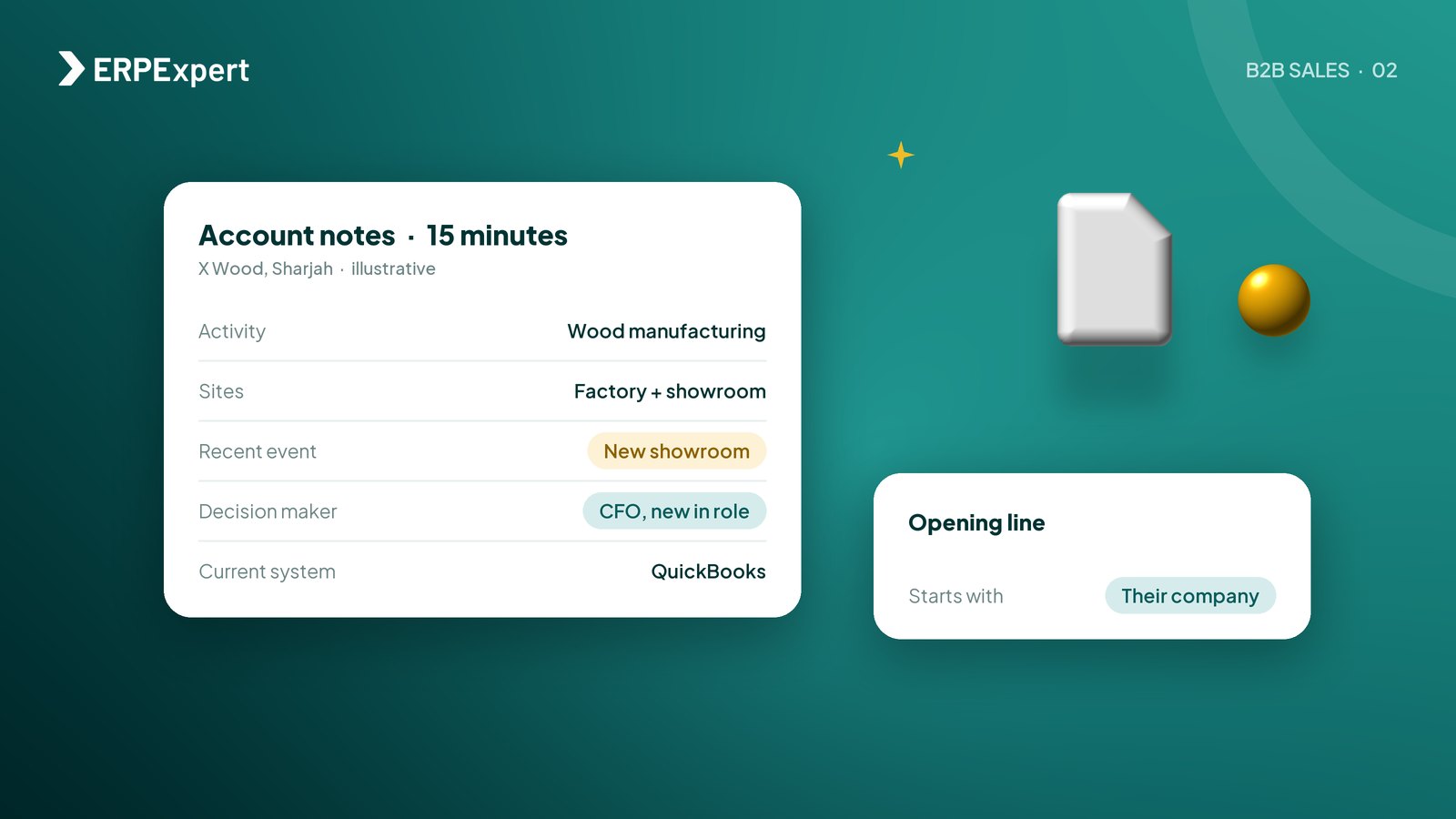
A prospect who hears their company's name in your first sentence stays on the line. What to gather in 15 minutes before a B2B call, where, and how to use it.
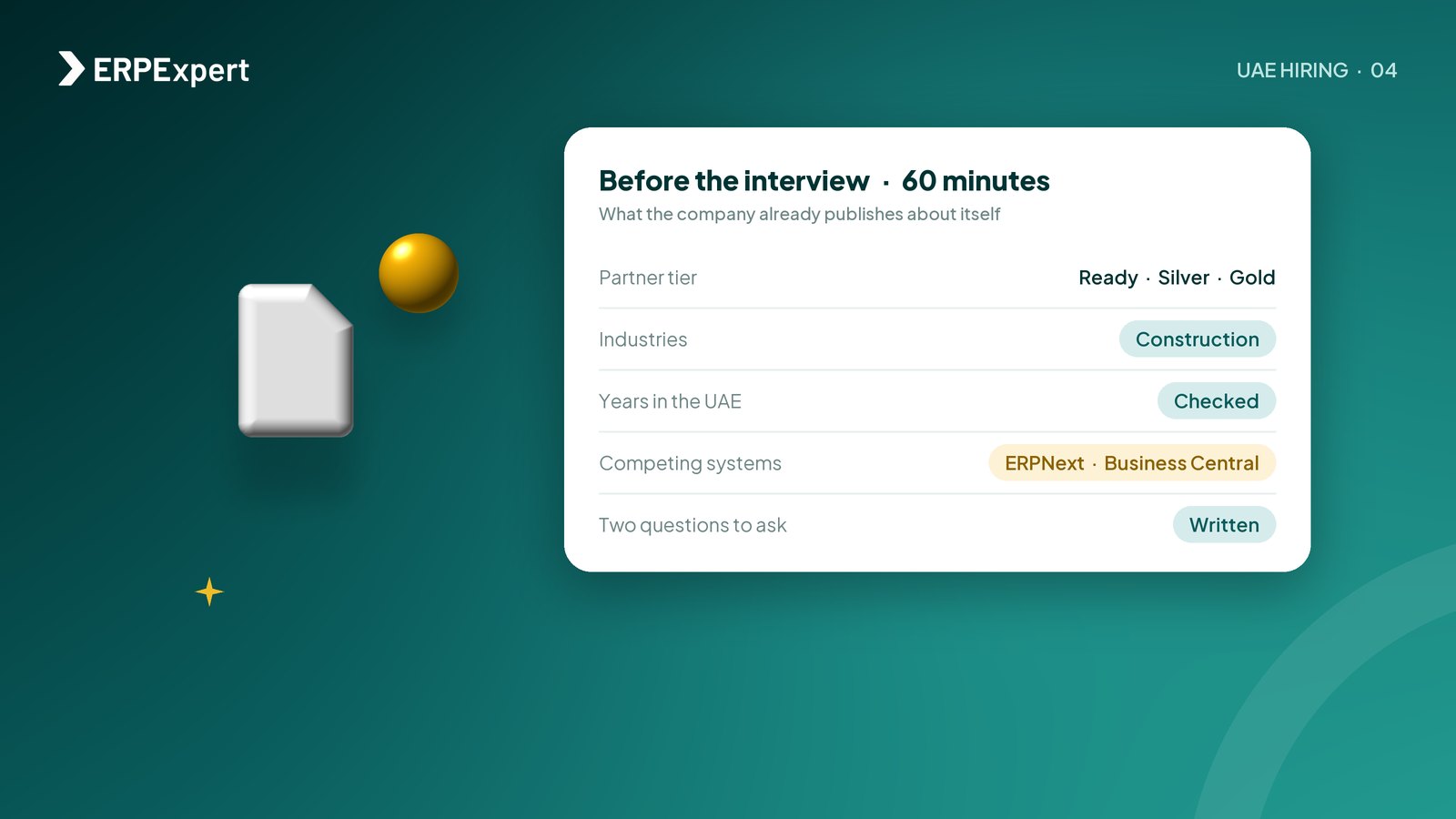
Not knowing what a company shows on its own website sinks a candidate fastest. What to study before an interview at an Odoo or other ERP partner, in one hour.
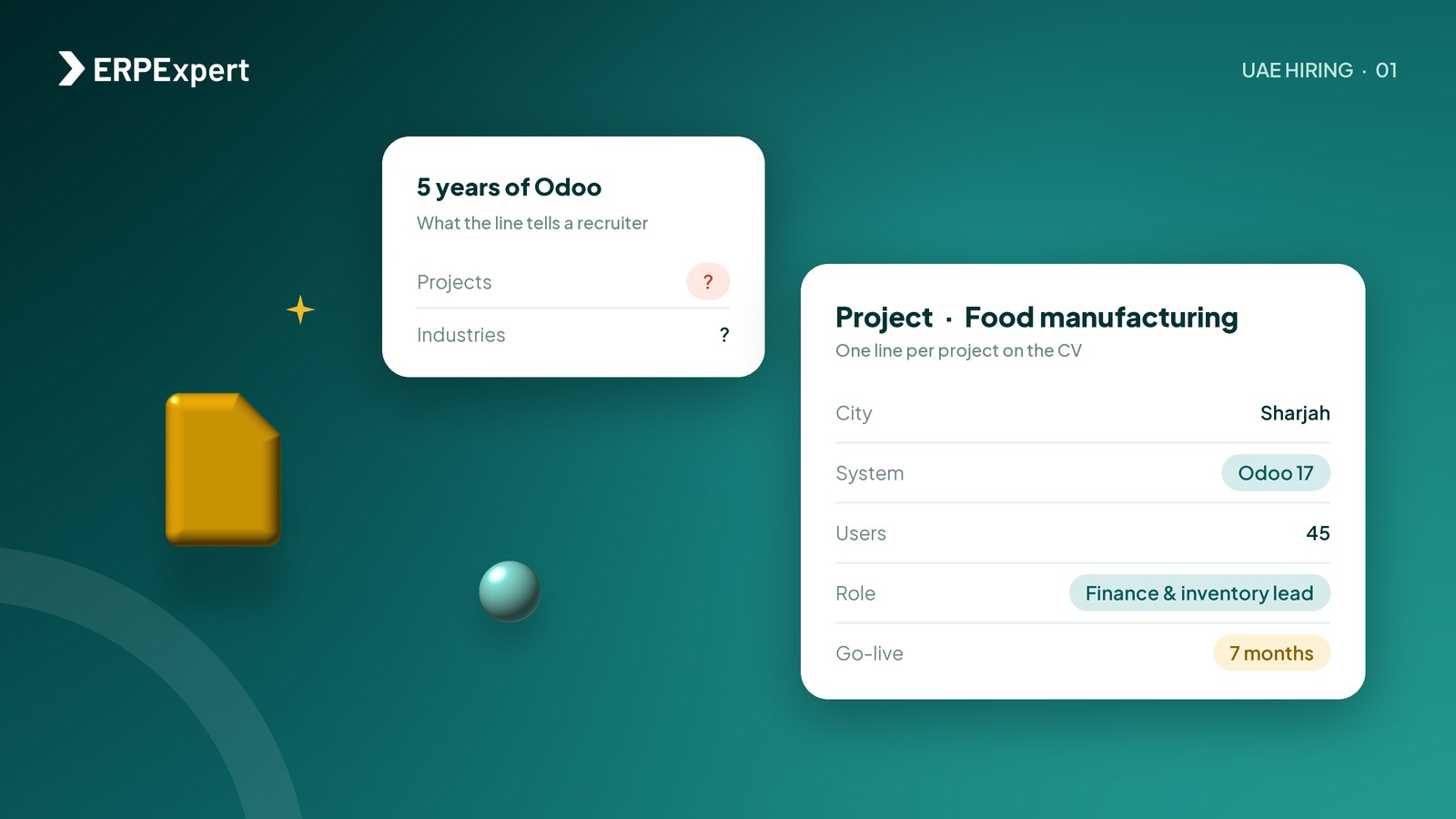
A UAE hiring manager looks for three numbers before your years of experience: how many projects, which industries, and your role on each. How to write them.
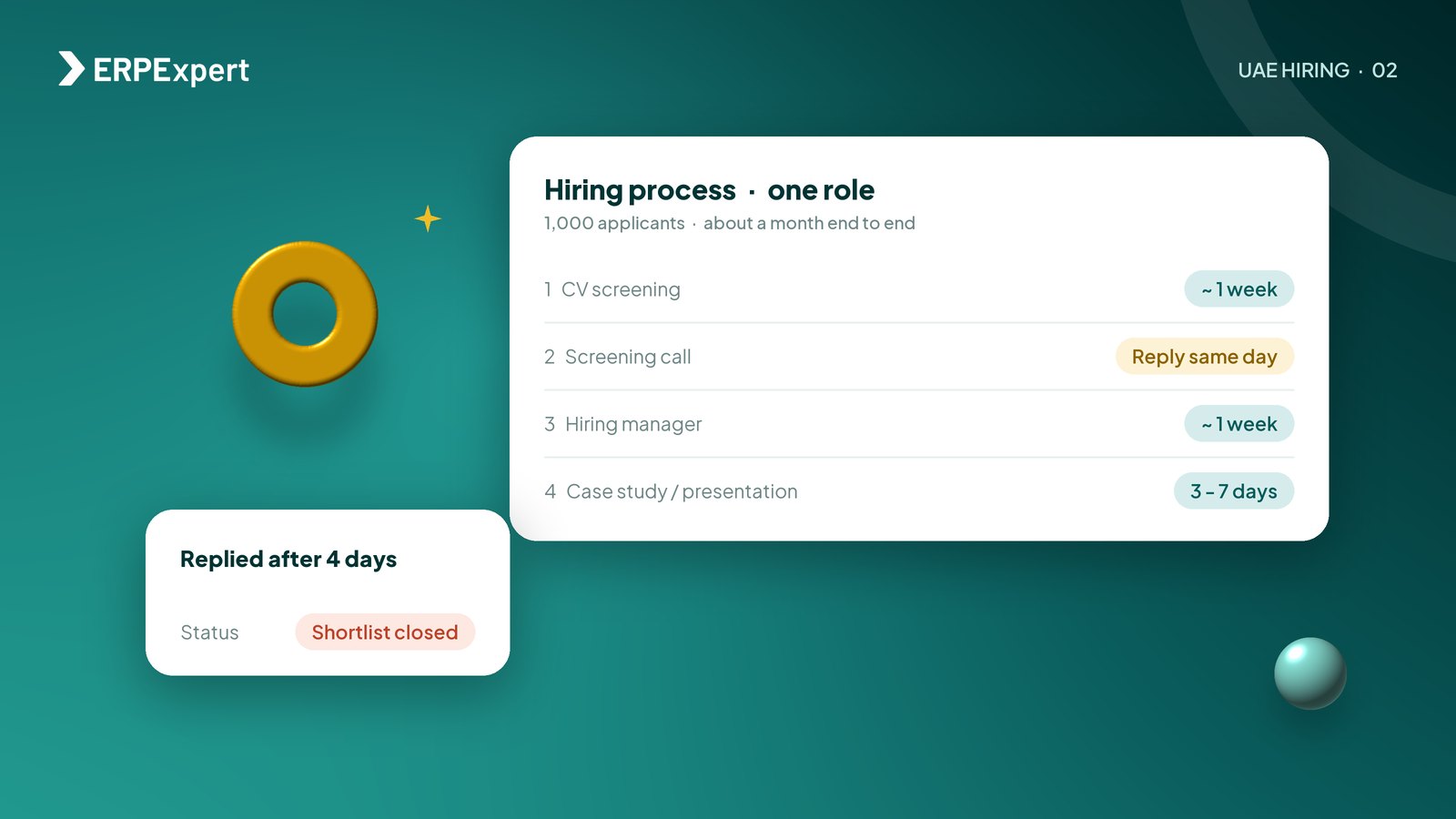
Most UAE hiring runs in four stages, from CV screening to a case study, and capable candidates drop out simply because they took three days to answer.
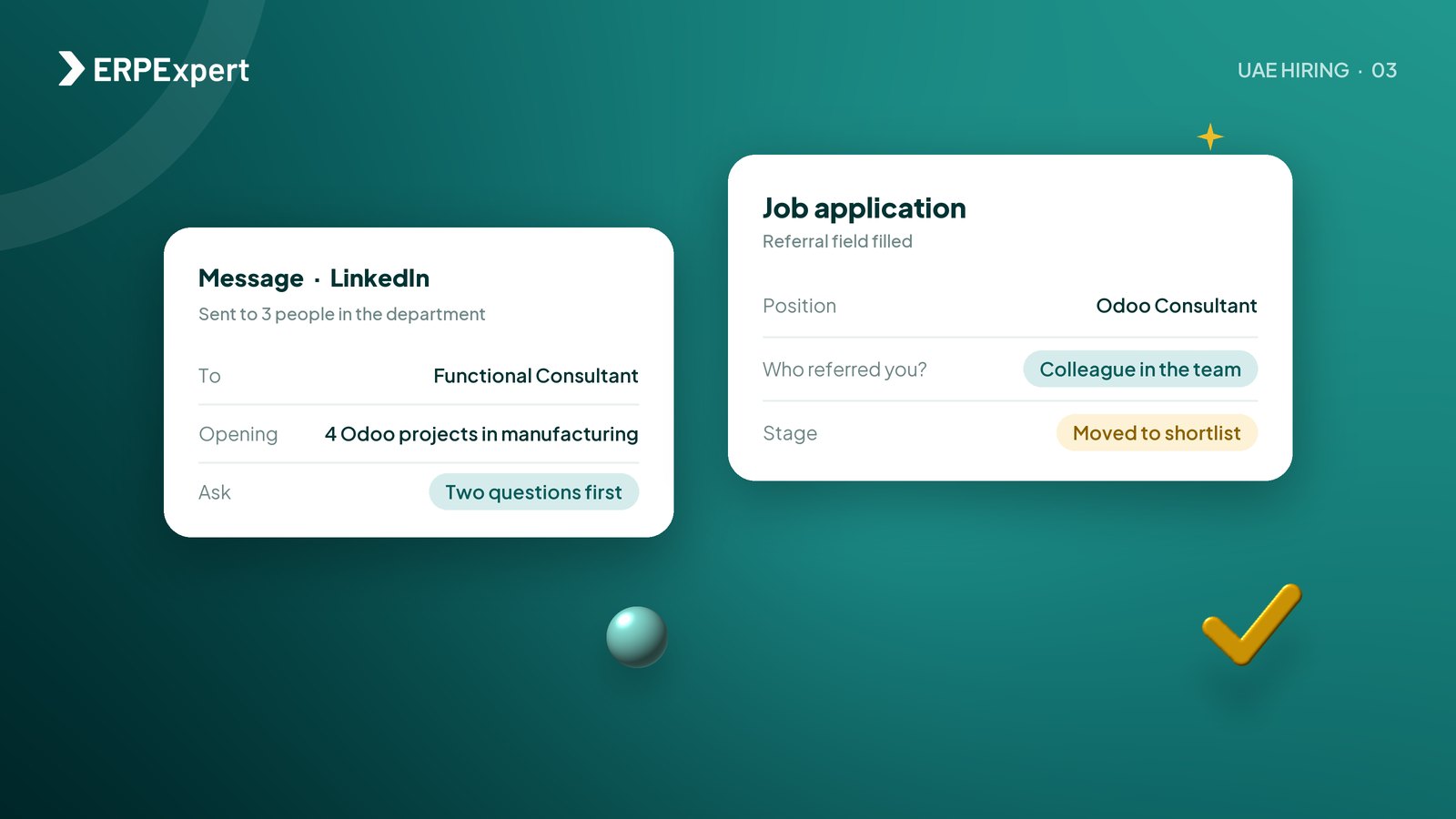
An internal referral lifts you above hundreds of applicants. How to reach the right team on LinkedIn, what to write first, and what to do if you know nobody.
An accountant already owns what cannot be taught quickly: the entry, the close, the reconciliation. Exactly four things are missing, in a build order.
Published salary figures contradict each other, so no number is quoted here — only the six factors that move pay and three ways to find your own range.
A consultant is rarely replaced for not knowing the product. What decides it is reading anger, saying no with a price attached, and escalating on time.
Migration gets one line in the proposal and eats more project time than any other item. What moves, what stays behind, and how opening balances are entered.
A vendor demo is built to impress, and that is its job. Three scenarios to send a week ahead, and eight questions that expose the real limit.
Every system measured against one question: who ships the tax integration? The vendor in the core product, under a separate licence, a partner, or nobody.
The job wants experience and the experience needs a job. Four real ways into the market, the portfolio project you can build alone, and what a CV is read for.
ERP is not ordinary freelance work: the project runs for months and failure leaves a company unable to invoice. Four conditions before going independent.
The vocabulary of an implementation meeting, defined in one line each and grouped by meaning rather than alphabetically, plus the four pairs most confused.
Go-live is a window of about two days, not a date. The six preconditions, the step everyone skips for time, and the rollback plan written beforehand.
A failed implementation rarely fails because of the software. Seven causes, every one visible months before go-live, each with its early sign.
Five modules no system works without, ten that are a purchasing decision, the order to switch them on in, and the one question that keeps a quote honest.
"ERP consultant" covers six roles that diverge in skill, career path and pay. What each does with its day, and which door to enter by.
Four abbreviations put in front of you as four competing products. Three are chapters of the fourth. The one distinction that settles which to buy.
The UAE chose a five-corner model, so your system never talks to the Federal Tax Authority. The accredited service provider decision, and the dates.
Phase two asks nothing new of your accountant. It asks your system for seven prohibited functions and four anti-tampering mechanisms, from ZATCA's guideline.
Cross-funding between projects, five leak points nobody prices, and why a 12% margin against a 10% retention leaves you on 2% of real liquidity.
A furniture factory implementation that failed on none of the risks in the register. Management by affection, and an obsolete printer used to demand a refund.
A litre is not always a litre and one gram of the wrong additive condemns a batch — a case study of a 48-hour cutover across 28 tanks.
Business teaches that effort and return are proportional. A personal account of the years when they were not — weak effort met with overwhelming provision.
A salesperson stands up mid-demo and says one order will now take three days. She is not exaggerating. What she is defending is territory.
The three jobs a consultant is paid for, why the do-it-yourself route costs more than the fee it avoids, and the four line items in the real bill.
92 million jobs displaced and 170 million created by 2030, a net gain of 78 million, and a list of the roles that shrink. The decision is personal.
Eleven short courses that take somebody with no machine learning background to building agents that work. The order matters more than the list.
A short audio and video episode explaining what an ERP system actually is, for somebody who has never worked with one. No acronyms, no vendor language.
The field that separates HR from system administration, the date that decides whether payroll runs, and why leave balances stop the WhatsApp queue.
Business language before software, functional or technical, one product rather than four, and a supermarket you build alone as proof.
How automatic postings replace manual journals, the two reconciliations that decide whether you can trust the figures, and a close cut to three days.
Five stages from receiving to dispatch, why cycle counting replaces the annual shutdown, and the costing method that changes your reported profit.
Opportunity, quotation, sales order, delivery, invoice, collection — plus the stock reservation and credit check that stop a bad order before it ships.
Procure-to-pay in five documents and the check that refuses to release a payment. From a client whose material cost ran at 80% against a norm nearer 60%.
An ERP is one database that several departments write into, not a program you install. Four tests for your setup, and the three parts a real system has.