
Getting an internal referral in the UAE via LinkedIn
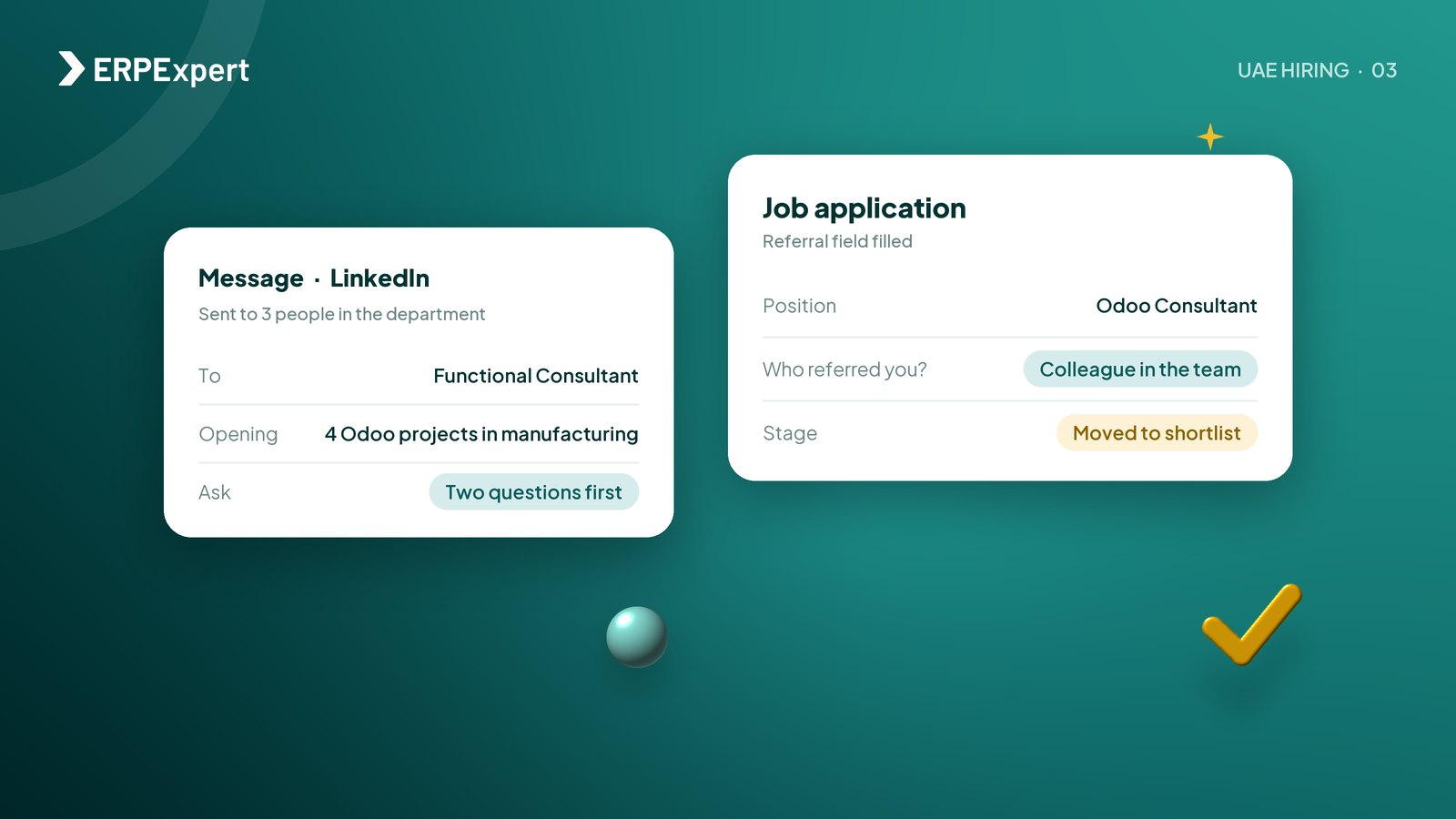
When I was applying for jobs in the UAE some years ago, I received several internal referrals from people who had never met me. All they knew of me was my LinkedIn profile.
Many application forms include a field most candidates skip: who referred you from inside the company? For the majority it stays empty. Fill it with the name of a current employee and your application moves to the top of the pile, because the company assumes its own staff will not put forward someone who would embarrass them.
That is the tenth point in the video this series is built on (in Arabic), and of all ten it adds the most to your standing.
Your profile gets opened every time
I have never seen a hire, whether I was the one hiring or watching someone else do it, where nobody opened the candidate’s LinkedIn. The reader goes through the experience section, then clicks into each company you worked for to see how large it is and what it does.
So your profile is your shop window even if the job itself came from somewhere else. The first requirement is that it agrees with your CV: same employers, same dates. If the CV says four companies and the profile says ten, the referral is dead before you have asked for it.
What makes a stranger willing to vouch for you
The person you message does not know you. Before they put their name next to yours, they need to see something. What that something is depends on your field:
| Field | What they want to find |
|---|---|
| Developer | A GitHub account with public repositories, even three or four, whether Odoo modules or other work |
| Consultant | Articles on LinkedIn, a blog, or a YouTube channel where you explain what you know |
| Designer or photographer | A tidy portfolio behind a single link |
| Anyone | Two or three written recommendations on the profile from former managers or clients |
The aim is that someone spends two minutes on your profile and leaves confident you know your subject. Nobody reads your whole history in two minutes. They read your last three posts, your headline, and the first two lines of your experience.
Reaching the team you actually want
Four steps, and they have worked for me many times.
Identify the department. If the role is Odoo consultant at a Dubai partner, the department is the implementation or consulting team. HR is the wrong door.
Find the people in it. On the company’s LinkedIn page, open the people section and search by job title: Functional Consultant, Project Manager.
Choose two or three. The best fit is someone at your level or one step above. A general manager rarely replies, and a recent joiner does not yet know how the referral process works.
Send a short message, and hold back the referral request. It does not belong in the first message.
The first message
Three sentences, and give them a reason to answer. Something along these lines:
“Hello, I’m [name], an Odoo consultant with four manufacturing projects behind me. I noticed your team is hiring a consultant, and I think my work on the manufacturing module could be useful to you. Could I ask you two questions about how the team works before I apply?”
If they reply, ask the two questions, and mean them. Once the conversation has happened, ask whether they would be comfortable putting their name in the referral field. Many say yes, partly because plenty of companies pay employees a bonus when a referral ends in a hire.
What to avoid is one message pasted to fifty people at fifty companies. Whoever receives it spots the copy in the first line.
Once they have said yes
A referral is a responsibility on your side as well, because someone has attached their name to yours. Four things protect them:
- Send them the CV you are about to submit, before you submit it, so they know what will go in under their name.
- Send the job link or reference number exactly as it appears on the company’s site, so they do not refer you for the wrong vacancy.
- Thank them in writing, briefly, whatever the outcome.
- Tell them the result when you get it. Someone who refers you once and never hears back will think twice about doing it again.
The relationship outlasts the application. Today’s referrer may be tomorrow’s colleague or manager, or the person who recommends you elsewhere two years from now.
When nobody inside will answer
If you cannot reach anyone in the department, you have two other routes.
References. People with a name in the field whom you know, or can reach through someone you know. Ask their permission, then list their numbers on your CV. When the company calls, they speak for you.
A recommendation letter. A letter written and signed by a former manager or client, attached to your application. A signed page from someone who can be checked carries more weight than calling yourself a “leader” in your CV summary.
Why referrals work
A single vacancy can draw a thousand applicants. Most send a CV and do nothing else. A smaller number write a cover letter. Fewer again have a well-kept LinkedIn profile, and fewer still arrive with an internal referral.
Each of those steps puts you in a smaller group, and the group carrying a referral is usually the smallest. It sits inside the five percent who reach a first interview. From there, what decides things is what you know about the company before the interview.
About the author
Ahmed Hassan Algammal
ERP implementation consultant. More than 60 deliveries across the UAE, Saudi Arabia and Egypt in manufacturing, contracting and distribution.
Book a call →