
Order to cash — the sale is not done until the money lands
A food distributor I worked with was closing orders worth thousands of dirhams a day and losing money on a meaningful share of them. Sales was hitting target. The failures happened after the handshake: goods promised that were not in stock, deliveries made to customers who had not paid an invoice in 90 days, and a receivables ledger nobody could reconcile to what had actually left the warehouse.
The order intake was fine. The cycle behind it did not exist.
What the cycle was replacing
Orders arrived on WhatsApp, typed by the salesperson from a customer phone call. The warehouse shipped on the assumption that stock was there, with no reservation, so two salespeople could and did sell the same pallet. Finance discovered a month later that the customer taking delivery was 90 days overdue on earlier invoices, at which point the goods were gone and the exposure had doubled.
Each of those is a control failure at a specific step. Naming the steps is what makes them fixable.
The six steps
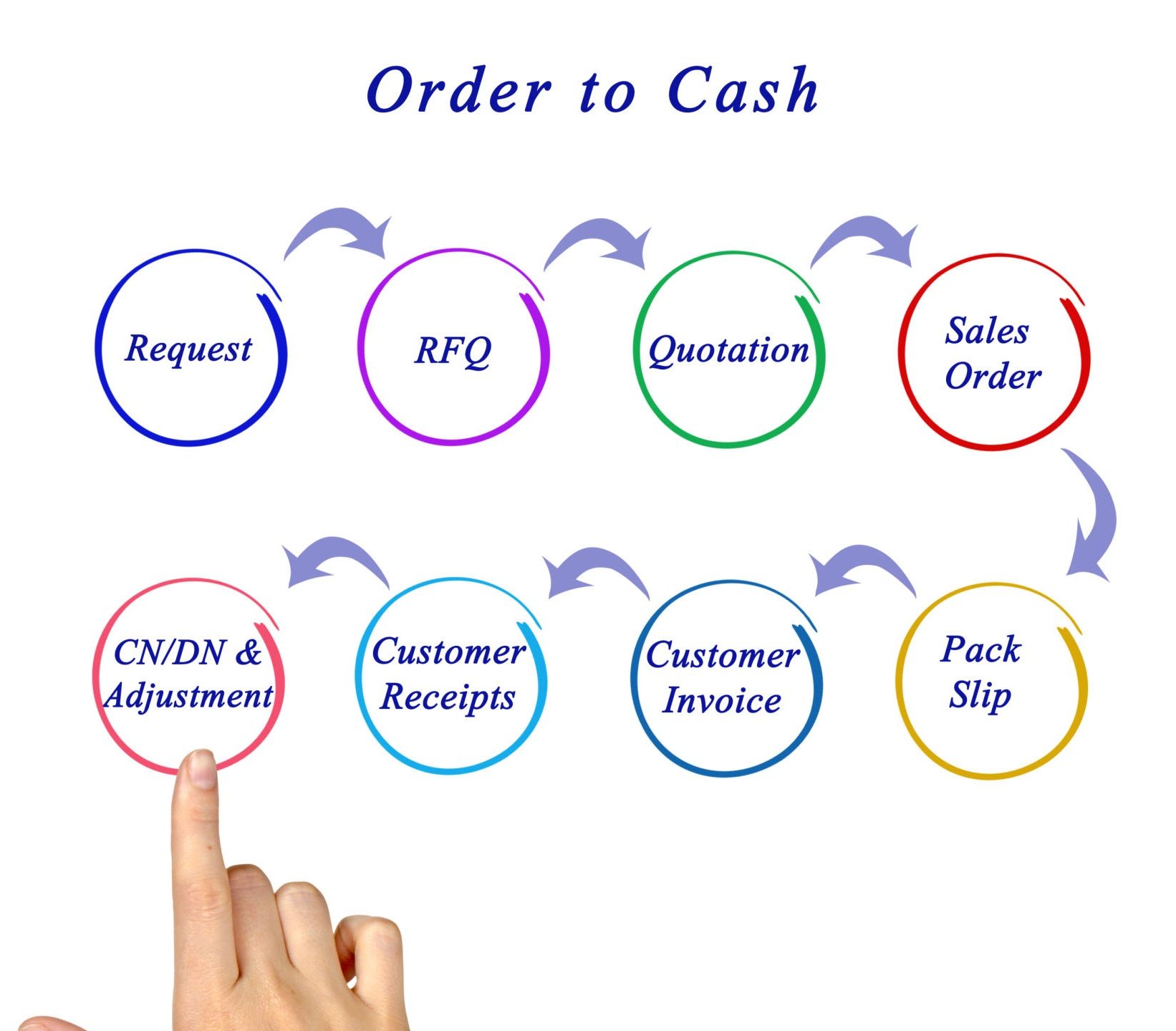
Order to cash, end to end
- OpportunityThe enquiry is recorded with what was asked and when, so a lead cannot go cold in a queue unnoticed.
- QuotationThe system tells the salesperson the contracted discount and the stock left, before he promises either.
- Sales orderAcceptance turns the quote into the contract, reserves the stock, and is where the credit check belongs.
- DeliveryGoods leave against a delivery note, and a short delivery is recorded on the loading bay rather than argued later.
- InvoicingAn invoice can only be raised against what was delivered, which is what makes the revenue figure mean something.
- Collection and reconciliationEach receipt is matched to the invoice it settles, which is the only way aged receivables come out accurate.
Every failure in the story above is a control missing at a named step. The first one to be dropped is step three, and dropping it is how two salespeople sell the same units.
1. Opportunity
The cycle starts before there is a sale. An enquiry is recorded against a prospect with what they asked about and when.
The value here is timing rather than record-keeping. Someone asks about laptops on Tuesday; if nobody has contacted them by Wednesday the system tells the sales manager. A lead that goes cold in a queue is indistinguishable from a lead that was never received, and only one of those is worth fixing.
2. Quotation
A formal price to the customer, and the first point where the system earns its cost.
When the salesperson builds the quote, the system tells him two things he could not otherwise know at that moment: this customer has a contracted 10% discount, and there are two units left in stock. Both are promises he would otherwise make wrongly. A quotation that commits to a delivery date the warehouse cannot meet creates a dispute six weeks later, and the dispute costs more than the order.
3. Sales order
When the customer accepts, the quotation becomes a sales order, and that document is the contract everyone downstream works to.
Confirming it reserves the stock. That reservation is the single most useful mechanic in the cycle: the units are now committed to this customer and cannot be sold again by another salesperson. Without it, availability is a number that was true when somebody last looked.
This is also where the credit check belongs. The system refuses to confirm a new order for a customer over their credit limit or past their agreed terms, and escalates instead of blocking silently. Putting that check here rather than at invoicing is the entire point: at invoicing the goods have already shipped.
4. Delivery
The picking instruction appears on the warehouse screen against the order, and the goods physically leave against a delivery note.
The case that matters is the partial one. If the customer receives 9 units against an order for 10, that fact is recorded at the moment it happens. The invoice then bills 9. A company that records deliveries loosely bills 10, receives a short payment, and spends a fortnight of somebody’s time reconciling a difference that was known on the loading bay.
5. Invoicing
On every system I have implemented, an invoice can only be raised against what was actually delivered.
That constraint sounds bureaucratic and prevents most receivables disputes outright. It also makes the revenue figure mean something: revenue is recognised against a delivery event with a document and a date behind it, not against a salesperson’s confidence.
Where invoicing is detached from delivery, the customer balance is always wrong. Not sometimes. The two records are maintained by different people from different sources, so they drift by construction, and the drift is only discovered when a customer disputes a statement.
6. Collection and reconciliation
The payment arrives and is matched to the specific invoice it settles, not merely added to the customer’s balance.
The reason to insist on invoice-level matching is the report that comes out of it. Aged receivables — who owes what, and for how long — is only accurate if every receipt is allocated. A company that posts payments on account has an accurate total and a useless ageing, and the ageing is what tells you which customer to stop shipping to.
The two controls worth arguing for
A hard credit limit at order confirmation. Salespeople will object, and the objection is legitimate: the limit will occasionally block a good order. Configure an override that requires the finance director’s approval and logs who granted it. That converts an argument into a record, and after two months the record itself settles the argument.
Reservation on confirmation rather than on picking. Some products default to reserving at picking, which means the stock report shows availability that is already committed. Ask the vendor which of the two the product does, and ask to see the stock screen with an open unpicked order against it. The systems comparison covers where each product’s sales module stops.
The line worth keeping
A deal is not won when the contract is signed. It is won when the money is in the bank account, and everything between those two events is where the margin is lost.
Order-to-cash is the cycle that makes the distance between them visible and measurable. The cost side of the same coin is the procurement cycle, what happens to the goods in between is the inventory and costing cycle, and where all three land is the ledger and the close. The full reading order is on the learn ERP page.
About the author
Ahmed Hassan Algammal
ERP implementation consultant. More than 60 deliveries across the UAE, Saudi Arabia and Egypt in manufacturing, contracting and distribution.
Book a call →